
When smoke drifts in from another unit, you have more control than it feels like. The fix is mostly about closing the small gaps smoke travels through, keeping your own air pushing out instead of in, and filtering what is left. Do those three things in that order. One honest note before you start: in an apartment you can cut the smoke down a lot, but you may not erase it completely if a neighbour smokes heavily indoors. The only permanent fix is the smoke at its source, which is where a conversation with management comes in later.
Start here. The order matters more than any single product. Seal the gaps, manage your air pressure, then filter. An air purifier on its own rarely fixes smoke that is coming through the walls.
First, Find Where the Smoke Is Getting In
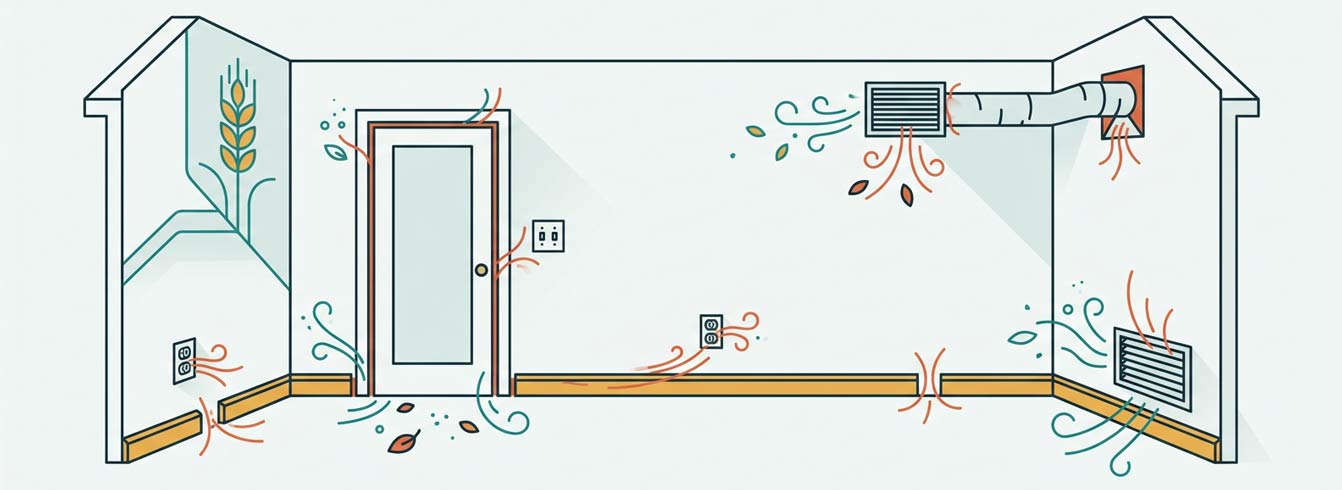
Smoke does not come through solid drywall. It rides air currents through small openings, so the job is finding yours. Wait until you can actually smell it, then check the usual suspects:
- Electrical outlets and light switches on a wall you share with the neighbour
- Gaps where pipes pass through walls, or under the kitchen and bathroom sinks
- The seam around heating and cooling vents, and any shared ductwork
- The top and bottom of baseboards where the caulk is missing or cracked
- Under doors, and around sliding patio-door frames
- Window frames, the dryer vent, and the kitchen or bathroom ceiling
A lit incense stick, or even the smoke from a blown-out match held near these spots, will drift toward a leak and show you where air is moving. Mark each one as you find it.
Seal the Gaps First
This is the step that actually moves the needle, and it is the one most people skip on their way to buying a gadget. Work through the leaks you found:
- Put foam gasket sealers behind outlet and switch plates on shared walls. They cost a few dollars a pack and take minutes.
- Caulk around plumbing penetrations, the dryer vent, and any spot where something passes through a wall. Paintable caulk or a neutral-cure silicone both work.
- Seal the gap where a vent cover meets the wall or ceiling. For ductwork, mastic or a proper foil tape holds far better than canned expanding foam, which is a weak air sealer by itself.
- Run a bead of caulk along the top and bottom of baseboards on shared walls.
- Add a door sweep or a weighted draft stopper under doors, and weatherstrip the door and sliding-door frames.
You will not get a perfect seal in a rented unit, and that is fine. Every gap you close is a little less smoke, and the cheap fixes here often do more than an expensive machine.
Keep Your Air Pushing Out, Not In
Air moves from higher pressure to lower pressure. If your unit sits at lower pressure than your neighbour’s, you are quietly pulling their air toward you. Two practical moves help:
- Do not run your kitchen or bathroom exhaust fans while the neighbour is actively smoking. Those fans suck air out of your unit and pull replacement air in through every gap, smoke included.
- If you can, set a box fan or a small fresh-air fan to bring outside air in, ideally through a filter, so your unit holds a slight positive pressure and any leaks push out instead of in. Even cracking a window on the clean side with a fan there helps.
Add the Right Kind of Air Purifier
A purifier is worth having, but the type matters. Cigarette smoke is two problems at once: fine particles, and gases that carry the smell. A HEPA filter catches the particles. Only activated carbon, sometimes labelled charcoal, pulls out the gases and the odour, so a HEPA-only unit will clean the haze but leave the smell. You want both, with enough carbon to matter rather than a thin token layer. Run it in the room you use most, usually the bedroom, and replace the carbon on schedule, since it loads up and quietly stops working. Remember a purifier only cleans the air already in the room. It does not stop smoke from getting in, which is why it comes after sealing and pressure, not before.
Open Windows at the Right Times
Timing beats brute force. Air the place out when the neighbour is not smoking to flush the stale air, and keep windows shut while they are. If you have windows on two sides, you can draw fresh air in on the clean side and push air out toward the smoke side with a fan, which keeps the current moving away from you instead of toward you.
What Is Not Worth Your Money
A few popular fixes do almost nothing against a steady source of smoke:
- Ozone generators and ozone-producing ionizers. Ozone is itself a lung irritant, so you would be trading one problem for another. Skip them.
- Bowls of vinegar, odour-absorbing gels, and houseplants. They barely register against the volume of smoke from an active neighbour.
- Sealing alone, with nothing else. Closing gaps helps a lot, but if you ignore air pressure and filtering, the smell still finds a path.
When Sealing Is Not Enough
If you have done the work and smoke still gets through, the real fix is the source, and that is a conversation rather than a caulk gun.
- Start with the neighbour if you feel safe doing so. Some people honestly do not realize the smoke travels next door.
- Keep a dated log of when it happens and how it affects you. If it aggravates a health condition, ask your doctor for a short note.
- Put your complaint to the landlord or condo board in writing. Once they are on notice, dealing with a steady nuisance becomes their job, especially in a building with a smoke-free policy.
For the legal side of complaining about a neighbour’s smoking in Alberta, including the Residential Tenancies Act, the RTDRS and condo bylaws, see our Rentals legal questions and Condo legal questions pages.
Disclaimer
This website is an independent informational resource about smoke-free housing in Alberta. It is not affiliated with Action on Smoking and Health (ASH) Canada, Smoke-Free Housing Alberta, or any of their partners. The tips here are general information. Before sealing anything that involves your building’s structure or shared systems, check with your landlord or condo board.