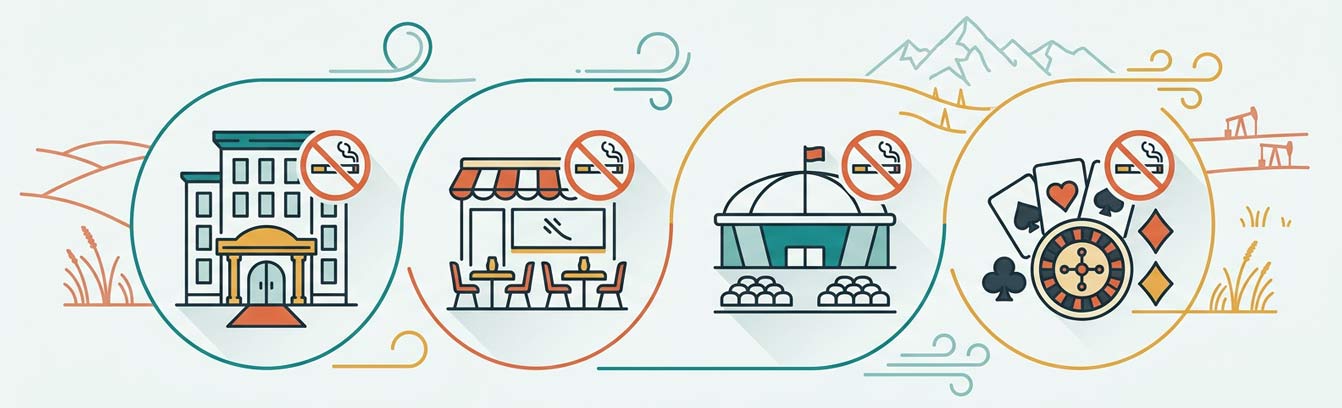
Most people know by now that second-hand smoke is dangerous. The science has been settled for decades. But what many don’t realize is how far the push for clean indoor air has spread. It started in offices and restaurants. Then it moved into apartment buildings and condos. Now it’s reaching places you might not expect.
Why Smoke-Free Policies Continue to Expand
Second-hand smoke contains over 4,000 chemicals, with 50 linked to cancer. Non-smokers exposed to it face a 20 to 30 percent higher lung cancer risk. At least 800 non-smokers die annually in Canada from second-hand smoke-related heart disease and cancer.
Alberta surveys show 64 percent of multi-unit residents would choose a smoke-free building, and nearly half have had smoke odour enter their home. Smoke stains walls, ruins furniture, and drives up cleaning costs. Allowing smoking costs owners money. Banning it saves money.
What began as a public health campaign became a smart business move.
Hospitality and Public Venues
Hotels went smoke-free first. Travellers wanted rooms without stale cigarette smells. Housekeeping costs dropped when rooms no longer required deep cleaning after every guest. Major chains made the switch and never looked back.
Restaurants and bars followed. Alberta’s provincial rules now ban smoking in all enclosed public spaces, including pubs, nightclubs, and concert halls. The five-metre rule keeps smoke away from entrances and windows.
Sports arenas made the change years ago. You cannot light up at a hockey game or a concert in Edmonton or Calgary. Same goes for community centres, libraries, and most gathering spaces.
The hospitality sector adapted faster than predicted. Patios became popular alternatives. Heated outdoor spaces let people step outside without freezing in winter. Business owners found ways to accommodate smokers without forcing everyone else to breathe the smoke.
Gaming Venues and Indoor Air Quality
This is where the conversation gets interesting for a lot of people. Casinos have historically been places where smoking was part of the experience. The image of someone smoking at a slot machine or a poker table is baked into popular culture. But that image is changing.
The Evolution of Casino Smoking Policies
Casinos in many jurisdictions now restrict smoking. Some have gone entirely smoke-free. Others created separate smoking rooms with advanced ventilation.
Health concerns drove the change. Casino employees work long shifts and bore the brunt of second-hand exposure. Patrons started asking for clean air options. Survey data shows 86 percent of casino visitors, smokers included, prefer smoke-free gambling. Only 11 percent of people smoke overall, yet everyone at a casino that allows smoking breathes in the smoke.
Alberta’s rules apply to casinos like any other public venue. The five-metre rule blocks smoking near entrances. Inside, gaming floors face the same restrictions as bars and restaurants.
Even as physical casinos adjust, how people gamble has shifted. More people choose to play from home. That brings up a different set of considerations.
Digital Gaming and the Rise of At-Home Play
The growth of online casinos has changed the landscape in ways nobody predicted a decade ago. People who enjoy gaming can now do it from their living rooms. The experience is completely different from walking into a brick-and-mortar casino.
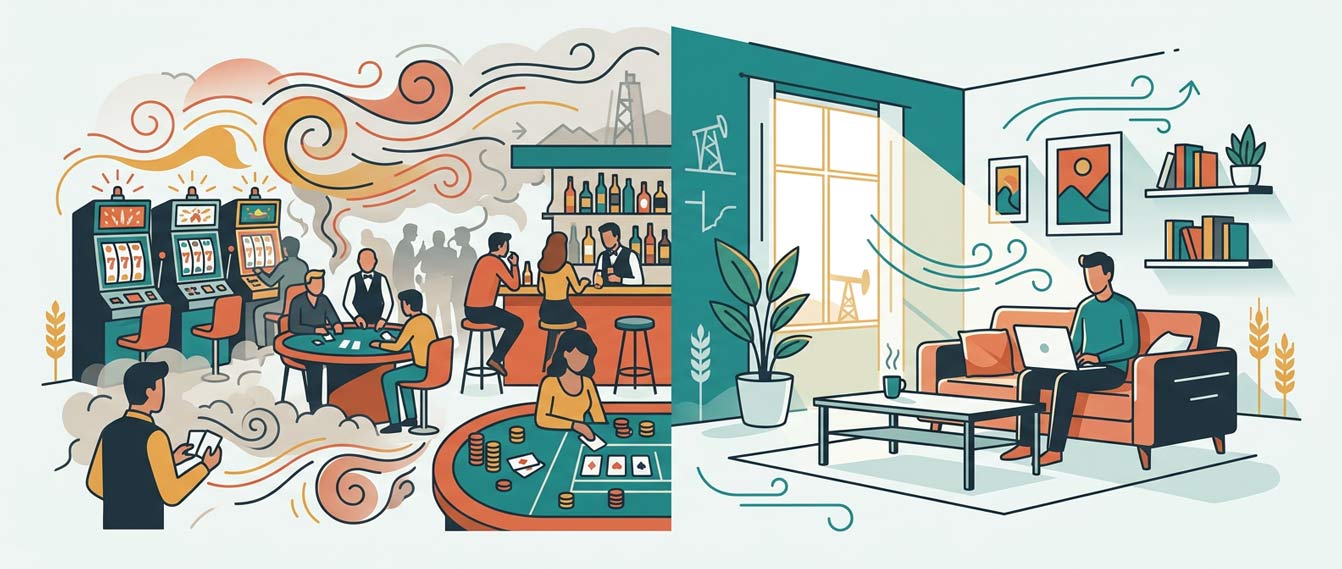
For one thing, you control your environment. If you want a smoke-free space, you have one. No one else’s habits affect what you breathe.
For another, the responsible gaming tools are built in. Alberta’s regulated platform, PlayAlberta, includes features like GameSense and self-exclusion. You can set boundaries before you start playing. That is harder to do in a physical casino where the atmosphere is designed to keep you engaged.
The numbers tell a clear story. Nearly a quarter of Albertans have gambled online in the past month, and a third have gambled online in the past three months. PlayAlberta reported roughly $275 million in net sales in 2025, an increase of more than $35 million from the previous year. That number contributes to the $1.5 billion in total gaming revenue that goes to Alberta’s General Revenue Fund.
Online Gambling in Alberta
| Metric | Figure |
|---|---|
| Albertans who gambled online in past month | Nearly 1 in 4 |
| PlayAlberta net sales (2024-25) | $275 million |
| Total online gambling market value (est.) | $900 million |
| Share captured by unregulated offshore operators | 70% |
The experience differs from a physical casino. You control your environment and the air you breathe. Responsible gaming tools like GameSense and self-exclusion are built into PlayAlberta. You can set boundaries before playing, unlike in a casino designed to keep you engaged. Compliance among Alberta players stays above 95 percent, holding between 95 and 98 percent for seven years.
People who quit smoking often adopt other healthy changes. Someone who keeps their home smoke-free approaches online entertainment with similar responsibility. Playing from home means no exposure to second-hand smoke. You control your space and air quality.
What These Changes Mean for Public Health
The shift toward smoke-free environments has produced measurable results. Alberta’s overall smoking rate dropped about 37 percent over roughly eight years. Still, almost 400,000 Albertans continue to smoke, and tobacco use kills over 4,000 residents annually, more than all other drugs combined. Alberta’s smoking rate of 12 percent exceeds the national average of 10.9 percent.
Reducing exposure matters most for vulnerable groups. Children who grow up in smoke-free homes have lower rates of respiratory illness. Adults with asthma or heart conditions benefit from clean indoor air. Seniors in multi-unit buildings no longer have to breathe their neighbours’ smoke.
The health care system saves money too. Fewer smoking-related illnesses mean fewer hospital visits. Less second-hand exposure means fewer emergency room trips for asthma attacks.
The Next Phase of Clean Indoor Air
Smoke-free policies will keep expanding. Workplaces that still allow smoking will face pressure to change. Outdoor spaces will see more restrictions.
For Alberta, the next steps will likely tighten existing rules rather than add new ones. The provincial framework is strong. Enforcement will become more consistent. Designated smoking areas will move further from buildings.
Digital gaming will continue reshaping leisure time. More people will play from home. That puts responsibility on individuals to create healthy spaces for themselves. A smoke-free home and responsible online entertainment fit together naturally. Both protect your health and peace of mind.
For residents, the future looks cleaner. The progress from when smoking was allowed everywhere has been remarkable. And it is not finished yet.
Disclaimer
This website is an independent informational resource about smoke-free housing in Alberta. It is not affiliated with Action on Smoking and Health (ASH) Canada, the Canadian Cancer Society, Smoke-Free Housing Alberta, or any of their partners. It also references legal gambling in Alberta: gambling is restricted to those 18 and older, and support tools such as GameSense and self-exclusion are available through PlayAlberta.